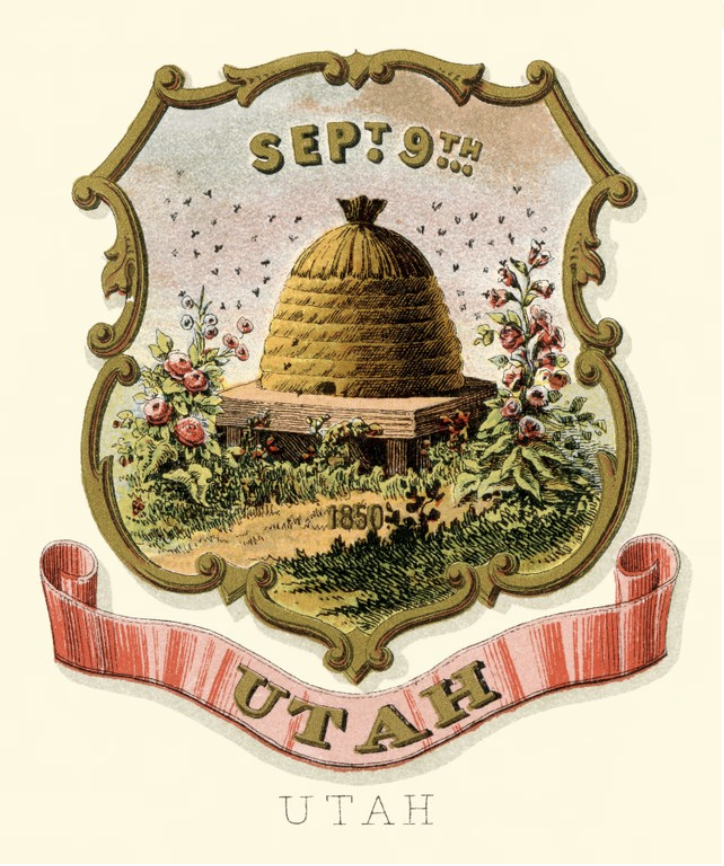
Although a beehive adorns Utah’s state seal, honeybees are not native to the “Beehive State.” They arrived in Utah with Mormon settlers, who held the honeybee in high regard for what they considered its industrious nature and collective spirit, virtues they saw embodied in their own community. The Church of Jesus Christ of Latter-day Saints leader Brigham Young initially named the region “Deseret,” the Book of Mormon’s word for honeybee.
Less celebrated is the state’s notable native bee diversity. In Grand Staircase-Escalante National Monument alone, more than 650 native bee species have been identified. By comparison, just 750 documented native bee species exist in total east of the Mississippi River.
Now, a push to store commercial honeybees in Utah’s Manti-La Sal National Forest could threaten its native bee diversity. Located about 100 miles north of Grand Staircase, the national forest is home to hundreds of native bee species, including the declining western bumblebee. Scientists worry that a large influx of honeybees could bring resource competition, disease and ecosystem impacts.
